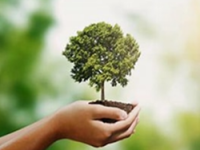
Most people aren’t aware that grass and trees do not like each other – they are not compatible. Many homeowners plant with little understanding that these two groups of plants come from different eco systems. Turf originated from meadows and prairies, while trees are native to woodland areas. If you walk in a forest you will not see grass.
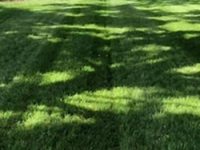
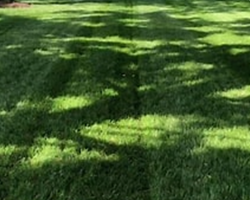
One of the biggest problems I observed over the years in the lawn and tree care business is too much shade causing damage to turf. Sun-starved grass, along with stagnant conditions from too much foliage, increases fungus problems which in turn creates an environment not conducive to your lawn and landscape. One of the most important ways to help your lawn and improve your landscape is to promote more light and air to reach your lawn by proper trimming and pruning of trees and shrubs.
Managing Turf in Shade
When trees are finally beginning to leaf out – in spring – that’s a welcome sight for most of us. But when trying to manage turfgrass, excessive shade means trouble. Turfgrass needs light, and shade reduces both quality and quantity of light reaching the turfgrass plants. Understanding some attributes of light along with how turfgrasses grow, will help in understanding the effects of shade on turfgrass, and will guide us in adjusting cultural practices to compensate for those effects.
Here’s the crux of the matter: Turfgrass (and all plants) must make carbohydrates their food by photosynthesis. Each individual plant needs a certain level of carbohydrates just to survive. The plant converts these carbohydrates into the energy required to maintain basic life processes. Beyond that, more carbohydrates are needed to initiate new growth and to recover from wear, disease, or insect injury. If the demand for carbohydrates exceeds the supply, the plant starves, eventually resulting in death.
The light for photosynthesis comes, of course, from the sun. Sunlight contains light of varying wavelengths, which correspond to the different color of the spectrum. A rainbow is the most familiar example of the light spectrum, the visible part of which includes the colors red, orange, yellow, and green, blue, violet. Red and blue light is what the plant needs for photosynthesis. Contrary to what you might first think, green light is basically inactive for plant growth and development. In fact, plant tissues appear green because they reflect the green light, rather than absorb it.
By the time sunlight has filtered through the canopy of trees, most (if not all) of the red and blue light has been absorbed by the tree leaves, leaving little photo synthetically-active light for grass. Thus, turfgrass in shade is often unable to make the necessary carbohydrates for healthy growth. The severity of the problem depends on the level of shade; turfgrass under very heavy shade may not persist, leaving nothing but bare ground and perhaps some shade-tolerant weeds. Under more moderate shade the turfgrass may survive, but it often lacks in this condition and will not be able to withstand traffic or pest injury, because the reserve carbohydrates needed for recovery growth are not there.
Light that does get through the tree canopy is skewed towards the longer wavelengths. This low-quality light causes the grass to grow more upright, with thinner, longer leaves. Other effects of reduced light include reducing tillering, shallow rooting, and thin cuticles. Furthermore, turf growing in shade may be subjected to competition from tree-roots for water and nutrients in the soil. As if all that’s not enough, the higher humidity and stagnant air often found in heavily shaded areas increases the chances for disease.
What can be done? First, choose the right grass species. Turfgrasses differ in their capacity to grow in shade. Among Kansas cool season turfgrasses, tall fescue is usually the best choice. Although the fine fescues (i.e. creeping red, chewings, hard and sheep) have better shade tolerance per se, they lack heat tolerance and typically decline during the hot summer. The warm-season grasses have the poorest shade tolerance, although zoysia does better than Bermuda and buffalo.
Where fescue is not an option (such as on a fairway), or where shade is still too heavy for fescue, there are other courses of action. The most obvious is to either remove trees, or to prune up limbs and thin the tree canopies. Grass will do better under openly spaced trees than under closely spaced trees because some diffuse blue and red light can still hit the turf from directions other than directly overhead. The quantity of light will be low, but at least its light the plant can use for photosynthesis. Pruned up limbs and thinned canopies will allow more sunlight to directly reach turfgrass.
If possible, raise the mowing height in the shade to compensate for the more upright growth of the leaves, and to provide more leaf area for photosynthesis. The thin, weak turf in shade may tempt you to fertilize more. Don’t do it! The nitrogen rate for shaded grass should be cut back to at least half of that for grass in full sun. Too much nitrogen causes the plant to grow faster; because the photosynthesis rate can’t keep up with demand for growth, the carbohydrate supply is further depleted, and starvation may be a result. Late fall fertilization, after tree leaves have fallen, is especially important for shaded cool-season turfgrasses. Irrigate infrequently but deeply. Light, frequent irrigation may encourage tree feeder-roots to stay near the surface, which increases competition between the trees and the turf. Restrict traffic in shade, Remember, carbohydrates are needed to recover from wear injury, and shaded turf usually has a minimal supply of reserves.
Finally, fungicides may be required for disease control on high-value shade turf. In a recent study, researchers at Ohio State concluded that brown patch was the ultimate cause of decline in shaded turf plots that had received higher rates of nitrogen. Additionally, the thinner cuticle of shaded turf may make it more susceptible to attack by pathogens.
So this summer when you are taking refuge from the sun under the shade tree, remember the turf there is under stress. A few changes in your management practices may make the difference between having grass or bare ground.
-Steve Keeley (Reprinted with permission from the Kansas Turfgrass Foundation.)
Why trees and turf don’t get along well
Trees and turf tend to be mutually exclusive in nature; you won’t see many trees growing in the prairies or grasslands, and grass is not common on the forest floor.
Our urban landscapes represent an unnatural ecosystem in which we force two somewhat incompatible plant types together and expect optimum performance from each. Trees and turf compete for sunlight, water, mineral nutrients and growing space below ground. Turf roots typically outcompete tree roots and win the below ground battle. However, the dense shade of a tree’s crown can be too much competition for turf, and trees win the aerial war.
Shade leads to reduced grass density, increased root competition and increased weed invasion. There are some varieties of turf that are somewhat shade tolerant, but this may be a partial solution, because shade-tolerant grasses tend to be less tolerant of wear.
Pruning for light penetration
Pruning to increase light penetration should be considered, keeping in mind that it is not a permanent solution. An important axiom to remember is that trees will grow into the voids created by pruning. Keep in mind the old rule of thumb not to remove more than one-fourth of the tree’s foliage-bearing crown in a single pruning. If a tree is topped or thinned too much, it will be stressed and will probably produce many water sprouts (suckers) along its branches to compensate for lost foliage. This defeats the purpose of pruning to allow more light penetration.
It may help to “raise” a trees crown to improve light penetration. Crown raising involves the removal of lower branches, and most tree species are tolerant of this pruning practice. Crown raising, however, does but not all significantly increase sunlight to the turf in most cases.
Root Control
Some trees have a tendency to form surface roots, which can be a major problem in lawns. Besides ruining the appearance of the turf, they can interfere with mowing equipment and can even become a safety hazard. Homeowners always want to know to what extent they can prune or remove tree roots without bringing about the demise of a tree. Since cut roots tend to develop more roots, root pruning is usually not a good solution.
The simplest maintenance recommendation is perhaps also the most important: Mulch. Mulching the root areas of trees is probably the least expensive but most beneficial thing you can do to enhance tree health and minimize competition with turf. Mulch helps retain soil moisture, moderates soil temperature, and reduces competition from weeds. Organic mulch can help condition the soil and improve microbial activity.
Apply mulch about 3 to 4 inches deep, but do not pile it against the trunk of the tree. As far as the trees are concerned, the bigger the mulched area the better. Group trees together in mulch beds and extend the mulched areas as far out as practical.
Fertilization
There is a long-standing, but inaccurate, belief that trees must be “deep-root” fertilized. This belief is associated with the myth that a tree’s root system is an underground mirror of the crown. Because most of the absorbing roots are actually in the upper few inches of soil, it makes little sense to place the fertilizer deeper.
If the lawn is being fertilized and trees are occupying the same area, the trees might not require supplemental fertilization. The key to any fertilization program is to base the application on the plant’s needs. Soil and foliar analysis can provide the information required to make educated decisions about nutrient needs.
Mowing
Mowing equipment and string trimmers can damage trees. Most people don’t realize the degree of damage that can be caused by the bumping of a mower or the whipping action of the nylon string in a trimmer. A tree’s bark can provide only so much protection against these devices. Young, thin-barked trees can be damaged almost immediately. In the worst-case scenario, the trees are eventually girdled and die. Those that are not killed will be stressed. The wounds may serve as entry points for disease, Bores or other insects. Many canker rot and root decay fungi have entered trees from wounds created by lawn and landscape maintenance workers.
Achieving a Balance
Trees and Turf can peacefully coexist and even thrive together in a landscape. Armed with an understanding of how each affects the other, you can modify your landscape and adjust your maintenance procedures to optimize the growing conditions for both.